
Home-services local SEO is not one ranking trick. It is the combined evidence that a real company serves a specific area, performs the requested service, earns customer trust, and can turn a search into a useful response.
That evidence comes from the website, Google Business Profile, reviews, local citations, service-area information, technical health, and the way the business handles leads.
This playbook turns those pieces into an operating rhythm.
Establish one source of business truth
Write down the canonical version of:
- Legal and public-facing business name
- Primary phone number
- Website URL
- Address or service-area configuration
- Hours and emergency availability
- Primary and secondary services
- Service cities, counties, or ZIP codes
- License and insurance details that may be published
- Logo and current photos
- Review-request link
Use that source when updating the website, profiles, directories, ads, and call tracking.
Do not create keyword-stuffed business names or fake locations. Follow the platform's representation rules and use addresses only where the business is genuinely eligible.
Make the Google Business Profile accurate
Review:
- Primary category
- Additional categories that accurately reflect the work
- Services and descriptions
- Hours and holiday hours
- Phone and website links
- Service area
- Appointment or quote links
- Business description
- Photos
- Questions and answers
- User-suggested edits
The profile should agree with the website. If the profile says emergency plumbing and the website never explains emergency service, the searcher receives mixed evidence.
Use tracking parameters on eligible website and appointment links so visits can be separated in analytics without changing the visible destination.
Build service pages around real work
A useful service page answers:
- What problem does the service solve?
- What is included?
- What should the customer expect?
- Which property or equipment types are supported?
- What factors affect timing or price?
- Which areas receive the service?
- What proof is available?
- What is the next step?
Do not create dozens of near-duplicate pages by swapping a city name. Each indexable page should have a real job: a distinct service, audience, location, or decision.
The home-services stack page shows how scheduling, invoicing, payments, and marketing can connect around that customer journey.
Use location pages only where they are useful
A location page earns its place when the business has specific evidence for that market.
Add:
- Services actually offered there
- Neighborhood or property context
- Travel or scheduling considerations
- Local projects or examples used with permission
- Team or branch details
- Reviews associated with that market
- Accurate contact and service-area language
- Internal links to the relevant service pages
Avoid doorway pages that promise the same text to every town. If the business serves a broad region without unique market information, a clear service-area section may be better than thin city pages.
Create a review workflow
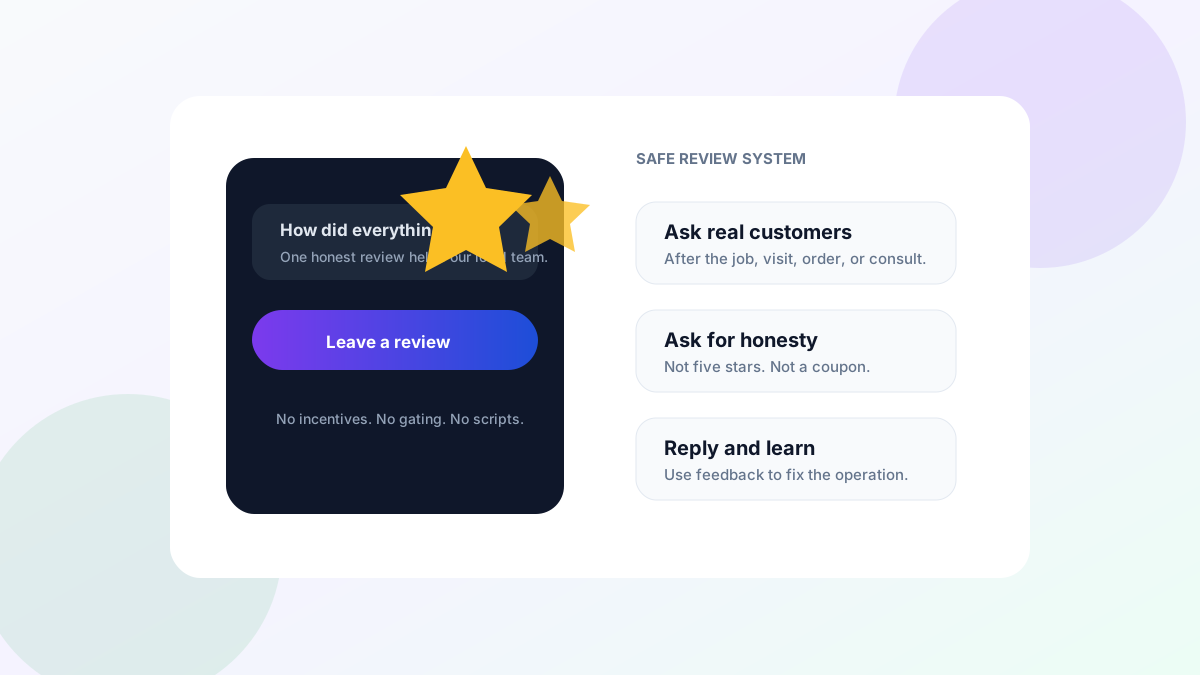
Ask real customers for honest feedback at a natural point after the work is complete.
A responsible workflow:
- Confirm the job is complete
- Send the same honest-review invitation to eligible customers
- Link directly to the review form
- Follow up sparingly
- Stop after a response or opt-out
- Route service-recovery issues to a person without blocking the customer's review choice
Do not buy reviews, offer incentives for positive reviews, or use review gating. The Google review request guide provides templates and safeguards.
Respond to reviews professionally without exposing private customer or job information.
Add local proof to the website
Proof can include:
- Original project photos with permission
- Service-area examples
- Team and vehicle photos
- Licenses or credentials shown accurately
- Manufacturer or trade affiliations that are current
- Process explanations
- Review excerpts used with permission
- Warranty or guarantee terms stated precisely
- Before-and-after examples with context
Avoid stock-only pages that could represent any contractor. Search engines and customers both need signals that the business exists in the market it claims.
Fix the technical foundation
At minimum:
- One canonical URL per page
- Clean internal links without redirect hops
- Indexable HTML content
- Unique page titles and descriptions
- One descriptive H1
- Useful image alt text
- Compressed, correctly sized images
- Mobile-friendly layouts
- Stable page loading
- HTTPS
- XML sitemap
- Accurate robots directives
- Structured data that matches visible facts
Schema does not create authority by itself. Use LocalBusiness or service markup only when the page and organization details support it. Do not add fake ratings, locations, prices, or awards.
Connect search to response
Ranking is wasted if the call, form, or booking request sits unanswered.
Define:
- What happens during business hours
- What happens after hours
- Which requests can book directly
- Which require dispatch review
- How urgent calls are escalated
- How spam and out-of-area leads are handled
- What confirmation the customer receives
Calendefy can handle guarded appointment paths and reminders. Invoicefy can carry the job into estimate, approval, and payment. WebElevated can manage the local SEO and campaign layer.
Publish content that supports service decisions
Useful article topics come from sales and dispatch questions:
- Repair versus replacement
- What an estimate includes
- Seasonal maintenance
- Permit or inspection process
- Equipment options
- Emergency preparation
- Service timing
- Warranty questions
- Financing or payment workflow
- Hiring and vetting a contractor
Answer the question honestly, then link to the relevant service. Avoid producing broad articles that have no relationship to the company's expertise or customer journey.
Use a monthly operating cadence
Every month:
- Check profile accuracy and suggested edits
- Add current photos
- Review ranking and conversion queries
- Audit service and location page performance
- Respond to reviews
- Fix broken links and outdated offers
- Review call and form quality
- Publish or refresh one genuinely useful resource
- Check core technical health
- Compare leads with booked work, not only sessions
Every quarter, decide which pages need more proof, which overlap, and which no longer represent the business.
Measure the local funnel
Track:
- Search impressions and clicks by query and page
- Google Business Profile actions
- Calls, forms, and booking requests
- Qualified versus spam or wrong-area leads
- Response time
- Booked jobs
- Revenue with an appropriate attribution model
- Review volume and response workflow
- Page speed and indexing
Local SEO becomes durable when the company can trace a line from accurate market information to qualified calls and completed work.