If you want to get invoices paid faster, start before the invoice is late. Most small businesses wait until day 31 to fix a problem that started on day 0: unclear terms, too many payment steps, weak reminders, and no simple path from approval to payment. A better invoicing workflow makes the next action obvious for the customer and predictable for you.
TL;DR: faster payment comes from less friction
The fastest invoices are clear, easy to pay, and followed up automatically. Put the due date near the total. Explain what was delivered. Offer a payment link. Send the invoice the same day the work is completed. Use friendly reminders before and after the due date. Track viewed, unpaid, and paid invoices separately. Late payment is not always a character issue. Often, it is a system issue.
Why late invoices hurt more than owners admit
A 2025 Intuit QuickBooks report found that U.S. small businesses with outstanding invoices were owed more than $17,000 each on average (source). That is payroll, ad budget, inventory, rent, taxes, or breathing room.
The danger is not only the unpaid balance. It is the second-order damage: owners delay hiring, postpone equipment, float expenses on credit cards, or avoid growth projects because the cash that should already be in the account is still sitting in someone else's inbox.
Step 1: make the agreement clear before work starts
The invoice should not be the first time a customer sees payment terms. Put the terms in the proposal, booking flow, service agreement, or checkout. Keep them plain:
- What is due now?
- What is due later?
- When is payment due?
- What payment methods are accepted?
- What happens if payment is late?
For service businesses, the biggest improvement is often a deposit. Even a modest deposit separates serious buyers from soft maybes and gives your team confidence that the scheduled work is real.
Step 2: send invoices the same day
Speed matters. If a client approved the work today, do not wait until Friday to invoice. The customer is most motivated immediately after the job is finished, the meeting is complete, or the deliverable is approved.
A same-day invoice also reduces disputes. The work is fresh. The conversation is fresh. The value is still visible. Waiting a week invites confusion.
Step 3: make the invoice easy to understand
A good invoice answers three questions in the first five seconds: what is this for, how much do I owe, and how do I pay?
Use short line items. Avoid internal shorthand. Put the total and due date where the customer can see them. If the invoice includes multiple phases, label them in human language: "Website launch deposit" beats "Phase 1 implementation services."
Step 4: remove payment friction
Every extra step lowers payment speed. A customer should not need to print, mail, call, download a portal app, or ask where to send the money.
The simplest payment stack is usually:
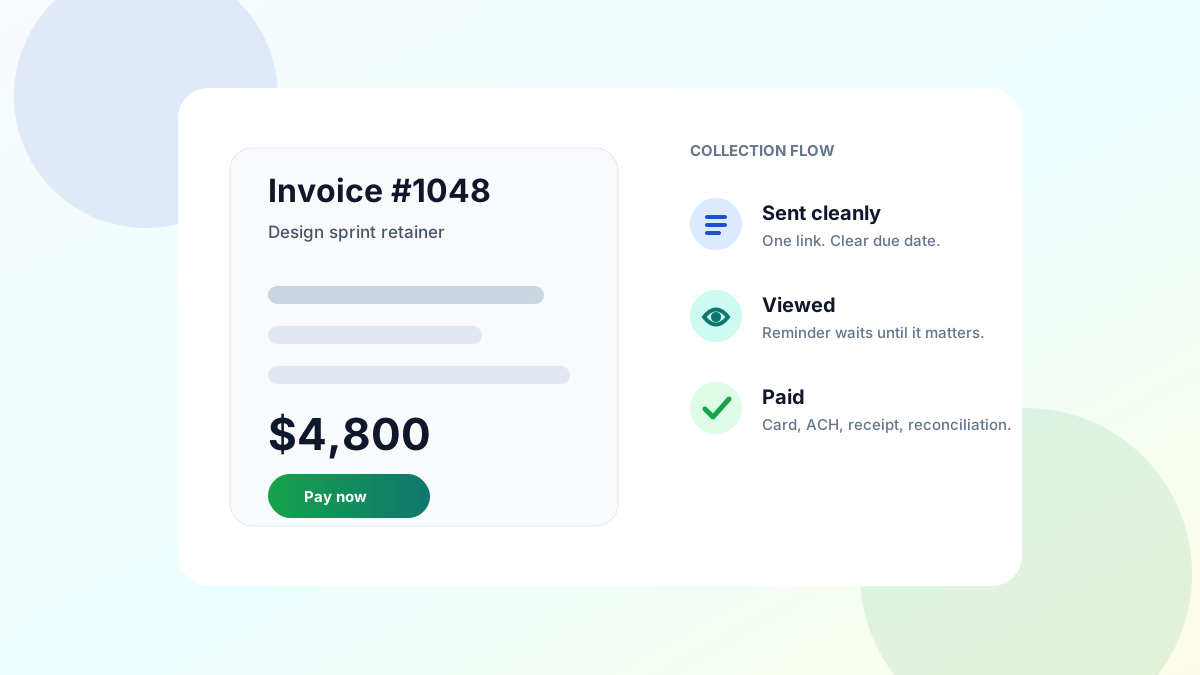
- A secure pay-now link on the invoice
- Card and bank transfer options
- Saved payment methods for repeat customers
- Automatic receipt after payment
- Reconciliation notes for your records
If you sell recurring services, retainers, memberships, or monthly maintenance, recurring billing should be the default. Manual monthly invoicing is a tax on your attention.
Step 5: use reminders that do not sound desperate
The best collection reminders are boring, polite, and automatic. They do not accuse. They do not ramble. They simply make the next action easy.
A basic reminder sequence:
- Day 0: invoice sent with payment link
- Day 3: friendly check-in if not viewed
- Day 7: reminder before due date
- Due date: payment due today
- Day 3 late: polite late notice
- Day 10 late: firmer message with next steps
The tone can stay human: "Just resurfacing this in case it got buried" is often better than legal-sounding language on the first reminder.
Step 6: separate late from at-risk
Not all unpaid invoices are the same. A customer who viewed the invoice twice and usually pays on day 10 is different from a new client who has ignored every message.
Track these buckets:
- Sent, not viewed
- Viewed, not paid
- Partially paid
- Due this week
- Late under 7 days
- Late over 14 days
- Disputed
This lets you respond with the right level of urgency instead of treating every invoice like a fire.
A realistic example
A two-person creative studio billing $6,000 per month can improve cash flow without changing prices. They collect 40% before the first work session, invoice the balance on approval day, add a card payment link, and send three automatic reminders. Nothing about the service changed. The operating system around payment changed.
That is the point: faster payment rarely comes from one dramatic tactic. It comes from making the right behavior the easiest behavior.
Where Cacele fits
Invoicefy helps businesses create cleaner invoices, payment links, reminders, and customer-friendly billing flows. For in-person or appointment-driven payments, Practice Pays connects the payment moment to the service experience. If you want this built into a broader growth system, the Cacele services team can help wire the workflow around your current operation.
The practical next step
Choose your most common invoice type and rebuild it. Shorten the line items. Add a pay-now link. Set a reminder sequence. Add a deposit rule if the work blocks real capacity. Then measure one number for 30 days: average days to payment. That number will tell you whether the workflow is doing its job.
Related implementation guides
For job-based billing, use the contractor invoicing workflow. Dental practices can use the patient payment plan guide to map estimates, authorizations, recurring payments, and reconciliation.